Air Source vs Ground Source Heat Pumps: Which Is Right for Your UK Home?
September 1, 2026•admin•8 min read
Choosing between an air source and a ground source heat pump is one of the first decisions UK homeowners face — and the answer isn’t always obvious. Both extract renewable heat from the environment and deliver it to your home. The differences lie in how they do it, what they cost, how efficiently they run, and whether your property can accommodate them. This guide compares air source vs ground source heat pumps across every dimension that matters for a UK home in 2026.
Key Takeaways
Air source (ASHP) is the right choice for most UK homes — lower cost, easier installation, and still highly efficient.
Ground source (GSHP) delivers higher SCOP (3.5–4.5 vs 2.5–3.5 for ASHP) but costs significantly more upfront due to groundwork.
ASHPs account for ~95% of UK residential heat pump installations — the install market, installer availability, and product choice all reflect this.
GSHPs require either 300–500 m² of undeveloped garden for horizontal loops, or expensive deep boreholes — not suitable for most urban homes.
Both types qualify for the £7,500 BUS grant.
If your garden is large enough for horizontal loops, ground source can pay off over a 15-year horizon — especially if you have high electricity-to-gas efficiency needs.
Photo: alpha innotec / Pexels
How Air Source and Ground Source Heat Pumps Work
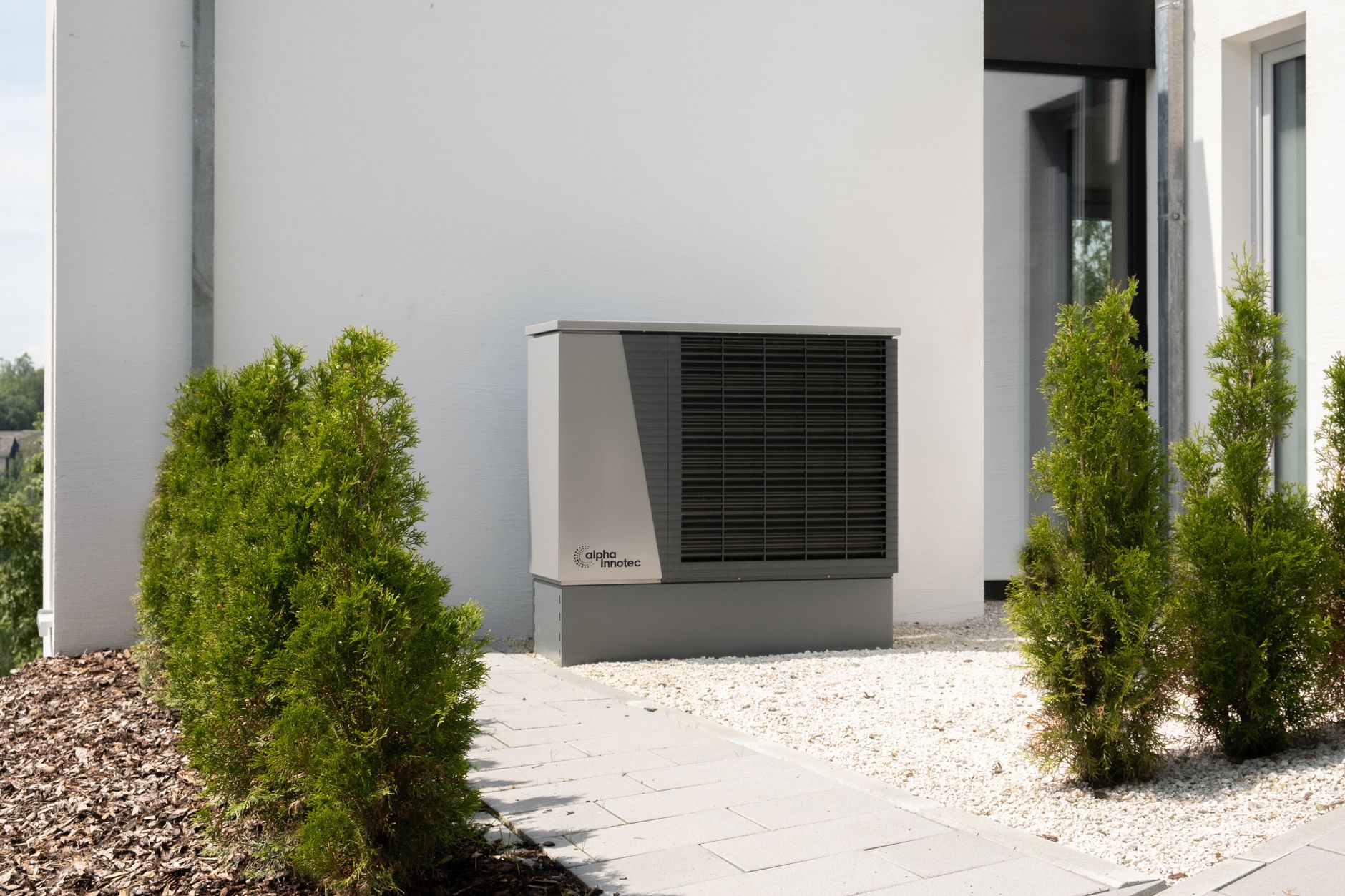
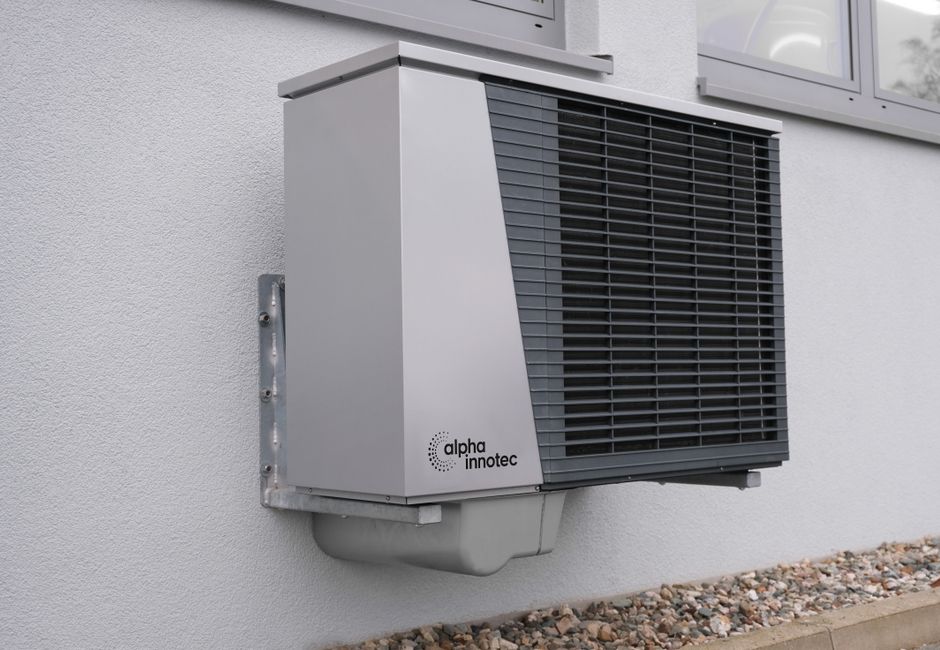
Air source heat pumps (ASHP) extract heat from outdoor air — even at temperatures as low as -15°C — and compress it to raise it to a useful temperature. The unit sits outside your home (similar in size to an air conditioning unit) and connects to your indoor heating and hot water system. The Heat Pump Association estimates ASHPs account for around 95% of all residential heat pump installations in the UK.
Ground source heat pumps (GSHP) extract heat from the ground, which maintains a stable temperature of around 8–12°C year-round in the UK. They use either horizontal ground loops (pipes buried in trenches across a large garden area) or vertical boreholes (pipes drilled 50–150 metres deep). That stable temperature source makes GSHPs inherently more efficient, particularly in winter.
Air Source vs Ground Source: Installation Cost Comparison
Cost factor
Air source (ASHP)
Ground source (GSHP)
Unit cost
£3,000 – £7,000
£8,000 – £15,000
Ground/borehole work
None
£3,000 – £15,000
Installation labour
£2,000 – £4,000
£3,000 – £6,000
Total installed cost
£8,000 – £15,000
£15,000 – £35,000
BUS grant available
Yes — £7,500
Yes — £7,500
Net cost after grant
£500 – £7,500
£7,500 – £27,500
The BUS grant applies equally to both system types, but its impact is much more significant for air source installations where it can cover the majority of the net cost. See our full heat pump costs guide for a detailed breakdown of what drives these figures.
Efficiency: which runs cheaper?
Both systems are measured by their Coefficient of Performance (CoP) — the ratio of heat output to electricity consumed. A CoP of 3 means 3kWh of heat for every 1kWh of electricity. Seasonal figures (called SCOP or SPF) average performance across the whole year.
Metric
Air source (ASHP)
Ground source (GSHP)
Typical seasonal CoP (SCOP)
2.5 – 3.5
3.0 – 4.5
Performance in cold weather
Drops below -5°C
Stable year-round
Annual running cost (3-bed home)
£900 – £1,400
£700 – £1,100
Nesta’s 2023 heat pump field trial, which monitored 742 homes across the UK, found that well-installed ASHPs achieved an average seasonal performance factor of 2.8. Ground source systems consistently achieve higher figures, typically 3.2–4.0 in real-world UK conditions. The efficiency gap translates to roughly £100–£300 lower annual running costs for ground source — real savings, but modest compared to the higher installation cost.
Space and property requirements
Space requirements differ significantly between the two systems:
Air source heat pump space needs
Outdoor unit: roughly 1m × 1m footprint, usually wall-mounted or on a plinth
Must be positioned where airflow is unrestricted (not in an enclosed courtyard)
Can be installed on terraced houses with a suitable outdoor wall or rear garden
Hot water cylinder required indoors (if you currently have a combi boiler, you’ll need space for one)
Ground source heat pump space needs
Horizontal loops: typically 200–600m² of garden per 6kW of output — most terraced and semi-detached properties simply don’t have the land
Indoor plant room space for the heat pump unit (refrigeration cabinet, usually larger than an ASHP indoor unit)
For the majority of UK suburban homes — terraced, semi-detached, or detached without extensive grounds — an air source heat pump is the only practical option. Ground source becomes viable for detached properties with either large gardens or borehole access.
Noise: is an ASHP disruptive?
Air source heat pumps produce a low hum from the fan and compressor — typically 40–50 decibels at one metre, similar to a quiet conversation or a refrigerator. Ground source heat pumps are essentially silent outdoors; any mechanical noise is confined to the indoor unit. If noise is a concern (shared walls, close neighbours), GSHP has an advantage — but modern ASHPs have improved significantly and are much quieter than older units. Read our dedicated heat pump noise guide for detail on specific models and planning rules around noise.
Planning permission
Both types of heat pump benefit from Permitted Development rights in most cases, meaning planning permission is not usually required. There are exceptions for listed buildings, conservation areas, and flats. Ground source boreholes are generally treated the same as ground loops for planning purposes — the drilling itself may require additional environmental permits if near aquifers. See our full heat pump planning permission guide for specifics.
Maximising long-term efficiency and have the budget
Ground source
Noise-sensitive location (shared walls, close neighbours)
Ground source or carefully sited air source
The Energy Saving Trust’s heat pump advice pages include a home suitability checker that can help narrow down your options. Whichever type you’re considering, always get a proper heat loss survey from an MCS-certified installer before committing — it’s the only way to size the system correctly and avoid costly over- or under-sizing. Check the full guides index for more detail on costs and installation.