Installation
Heat Pump Hot Water Cylinder UK: What Size Do You Need?
Heat pumps cannot work with a combi boiler setup — they need a hot water cylinder. Here's how to choose…
October 9, 2026
Read more →
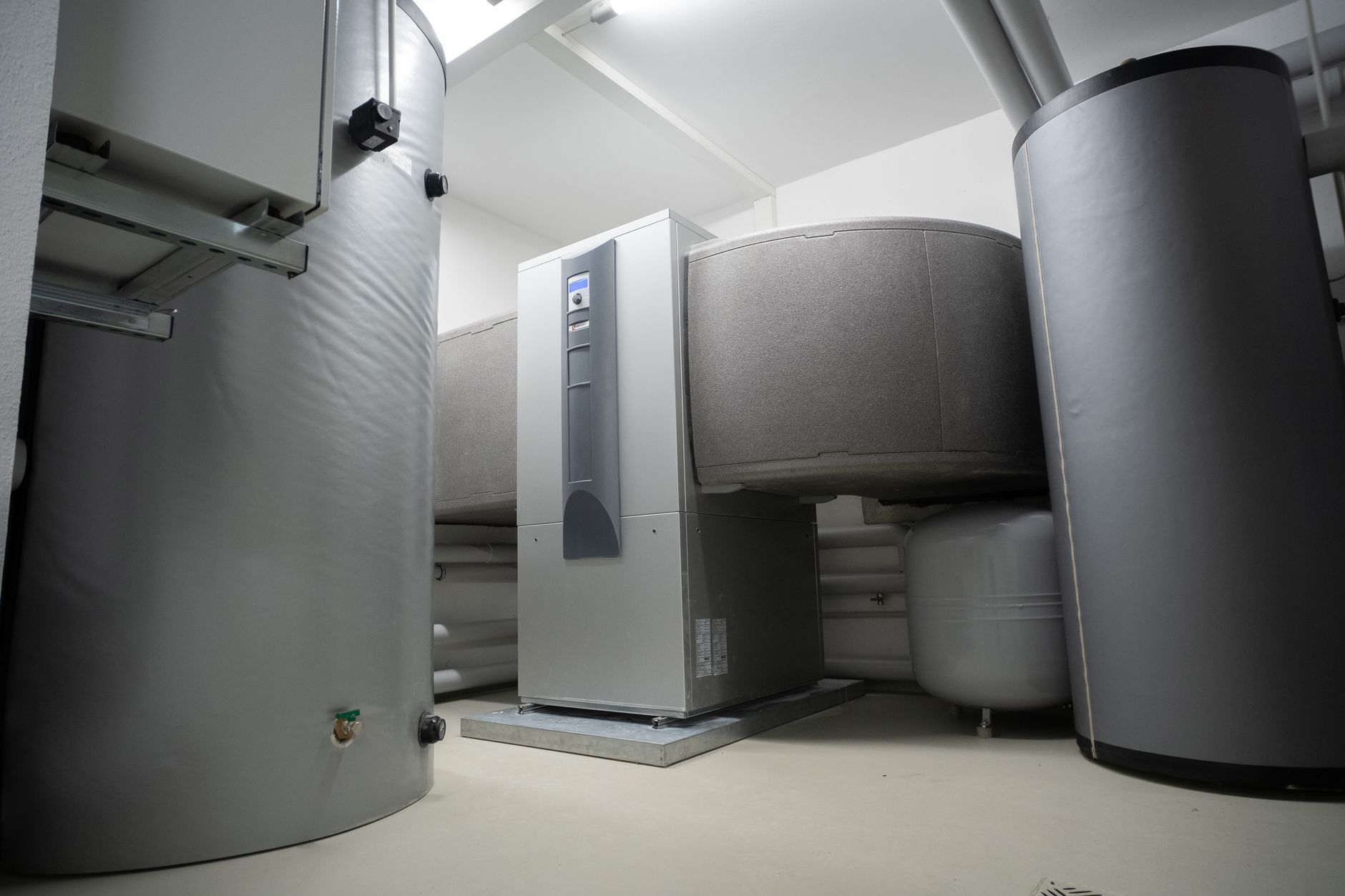
A heat pump buffer tank is one of those components that installers mention and homeowners promptly forget to ask about — until the bill arrives or the system starts short-cycling. Whether your air source heat pump actually needs a buffer tank (sometimes called a buffer vessel) depends on your existing heating system, the number of radiators, and how your installer has designed the hydraulics. This guide explains what buffer tanks do, when they’re genuinely necessary, what they cost, and how to have an informed conversation with your MCS-certified installer.
A buffer tank is a small, uninsulated or lightly insulated water cylinder — typically 50 to 200 litres — plumbed into the primary heating circuit between the heat pump and the rest of the system. Its sole job is to add volume (thermal mass) to the circuit so the heat pump has enough water to heat before it reaches its target flow temperature and switches off.
Without enough water volume in the circuit, a heat pump can short-cycle: it fires up, heats the small volume of water quickly, hits its cut-off temperature, switches off, the water cools, and then the cycle repeats within minutes. Short-cycling is bad for efficiency, bad for compressor longevity, and bad for running costs. The buffer tank prevents this by giving the heat pump a larger thermal mass to work with.
It’s worth being clear: a buffer tank is not the same as a hot water cylinder. A hot water cylinder stores domestic hot water for taps and showers. A buffer tank sits on the heating circuit only and does not supply hot water for domestic use.
You’ll often hear buffer tanks and low-loss headers mentioned in the same breath, and they’re sometimes confused. Both solve a similar hydraulic problem, but they work differently.
A low-loss header (also called a hydraulic separator) is a short, wide pipe — typically just 30–60 cm long — installed between the heat pump’s primary circuit and the secondary heating circuit. It decouples the flow rates between the two circuits so the heat pump can maintain its preferred flow rate regardless of what’s happening in the rest of the system. Low-loss headers have very little water volume (just a few litres) and are not primarily designed to prevent short-cycling.
A buffer tank adds significant water volume — 50 to 200 litres — and is specifically aimed at preventing short-cycling when the heating system doesn’t have enough radiator or underfloor heating pipework to provide adequate flow. Some modern systems use both: a low-loss header for hydraulic separation and a buffer tank for thermal mass.
The MCS (Microgeneration Certification Scheme) sets standards for heat pump installation in the UK, and MCS-certified installers are required to carry out a full heat loss calculation and system design check before recommending components like buffer tanks. If an installer recommends one without this calculation, ask questions.
This is the question most homeowners need answered. The honest answer: many modern heat pump installations don’t need a buffer tank at all — but some genuinely do. Here’s how to think about it.
The Energy Saving Trust recommends getting at least three quotes from MCS-certified installers before committing, as system design decisions like this can vary significantly between engineers.
Buffer tanks are not expensive components. The cost of the tank itself is modest — the labour for fitting and the pipework connections are where most of the expense lies.
| Component | Typical Cost |
|---|---|
| Buffer tank (50–100 litre, basic) | £150–£300 |
| Buffer tank (100–200 litre, quality unit) | £250–£500 |
| Installation labour (fitting, pipework, insulation) | £150–£350 |
| Total installed cost | £300–£850 |
Prices vary depending on the tank size needed, access to the plant room or airing cupboard, and whether the pipework is straightforward or requires significant modifications. If a buffer tank is being retrofitted to an existing installation, costs can be higher due to the disruption involved.
If a buffer tank is part of a new heat pump installation, a good installer will include it in their initial quote. It should not appear as a surprise add-on after the system design phase. Always ask during the quoting stage whether a buffer tank has been accounted for — see our full breakdown of heat pump costs in the UK for what else to budget for.
This is where it gets nuanced. A buffer tank solves a real problem — short-cycling — but it’s not a free efficiency boost. There are trade-offs to understand.
When a heat pump short-cycles, it repeatedly starts up and shuts down. Each startup event uses more energy than steady-state operation — the compressor works hardest during the start phase. Preventing short-cycling by adding water volume means the heat pump runs in longer, steadier cycles. Longer run times at lower temperatures are exactly what heat pumps are designed for, and they deliver much better COP (Coefficient of Performance) in this mode. Learn more in our guide to heat pump efficiency.
If a buffer tank is too large, the system can lose heat faster than intended. The heat pump heats 200 litres of water to 45°C, then sits idle while that volume slowly cools — which can mean the house overshoots temperature, the heat pump sits off for long periods, then fires up again with cooler water, requiring more energy to reach target temperature. An oversized buffer tank can also mask an underlying system design problem that should really be fixed properly.
The sweet spot is a correctly sized buffer tank — matched to the heat pump output and system water volume — specified as part of a properly designed installation. This is why the MCS design methodology matters. Check whether your installer is working to current Heat Pump Association technical guidance.
Experienced heat pump installers use a few practical rules when deciding whether a buffer tank is needed and how large it should be:
For more on what drives heat pump system costs and design decisions, see our guides to heat pump sizing, running costs, and BUS grant eligibility. Also check the Ofgem website for current energy price information that will affect your running cost calculations.
Heat pumps cannot work with a combi boiler setup — they need a hot water cylinder. Here's how to choose…
The quality of your installer matters more than the brand of heat pump you choose. Here's how to find MCS-certified…
A hybrid system combines an air source heat pump with your existing gas boiler — the heat pump handles mild…