Installation
Heat Pump Hot Water Cylinder UK: What Size Do You Need?
Heat pumps cannot work with a combi boiler setup — they need a hot water cylinder. Here's how to choose…
October 9, 2026
Read more →
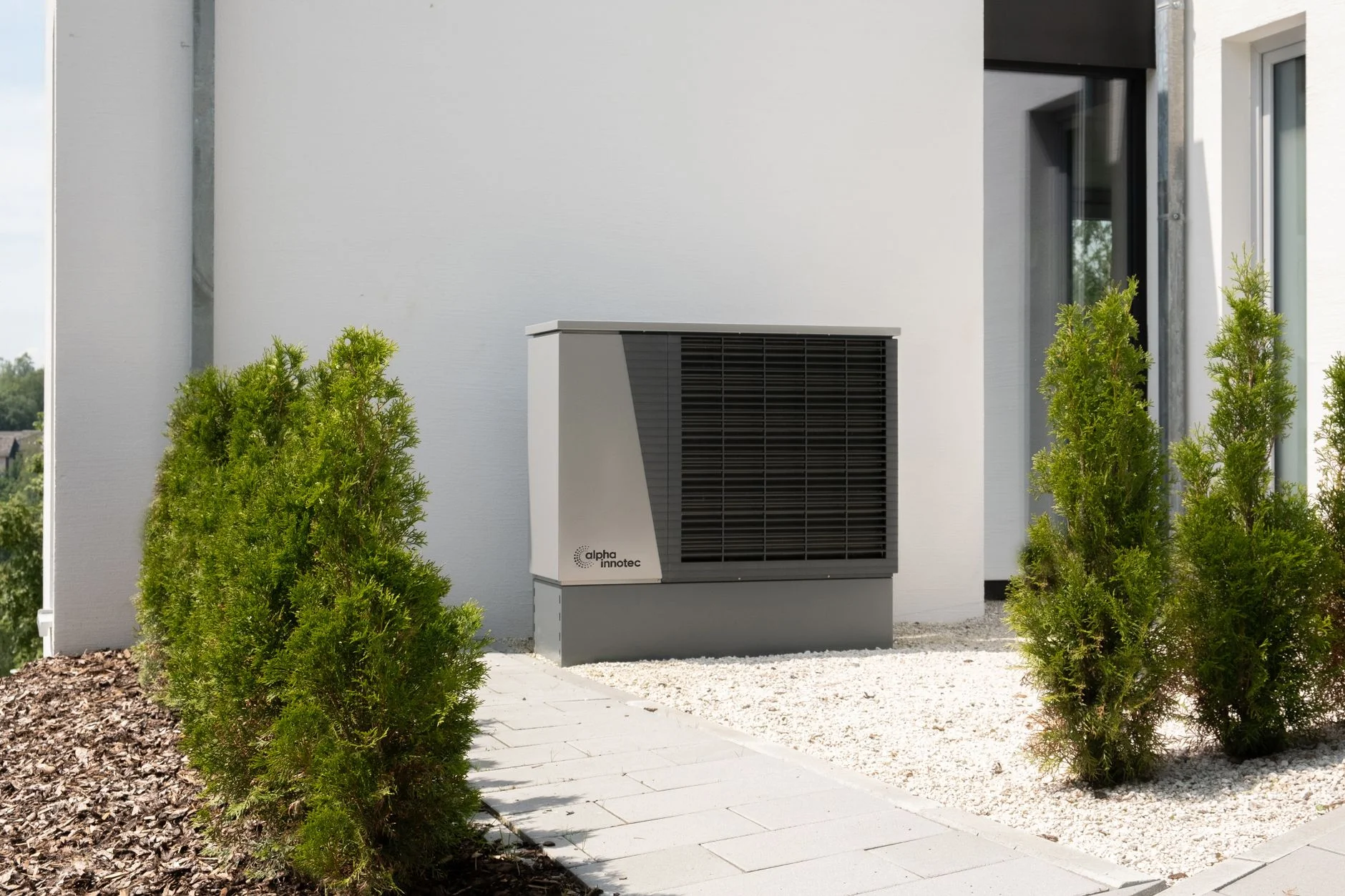
Heat pump noise is one of the most common concerns raised by homeowners considering the switch — and one of the most misunderstood. The short answer: modern air source heat pumps are not particularly noisy, but they do produce a constant low hum that differs from the intermittent sound of a gas boiler. Whether that’s a problem depends on where the unit is sited, what your neighbours are like, and which model you choose. This post gives you the real figures, explains the UK planning rules around noise, and offers practical guidance on keeping things quiet.
Sound levels are measured in decibels (dB). Here’s some context for the figures quoted in heat pump specifications:
| Sound source | Typical dB level |
|---|---|
| Rustling leaves | 20 dB |
| Quiet library | 30 dB |
| Quiet conversation | 40 dB |
| Modern air source heat pump at 1m | 40 – 50 dB |
| Normal conversation at 1m | 60 dB |
| Busy road at 10m | 70 dB |
| Lawnmower at 1m | 85 dB |
At one metre, a typical modern heat pump is comparable to a quiet conversation. At three metres — a more realistic distance from a neighbour’s window — the level drops to around 35–42 dB. The sound is a steady, low-frequency hum rather than an intermittent or sharp noise, which some people find less intrusive and others find more so (it’s always present when the unit is running, which in winter is most of the time).
Older heat pump models from 5–10 years ago were noticeably louder. The latest generation of units from Daikin, Vaillant, and Mitsubishi are substantially quieter, with some models rated as low as 37–40 dB at one metre. If noise is a particular concern, ask your installer to specify the quietest available model in the required output range.
For a heat pump to qualify as Permitted Development — meaning no planning permission is required — the installation must comply with MCS Planning Standard MIS 3005. This standard sets a clear noise limit: the sound level from the heat pump at the nearest neighbouring window or door must not exceed 42 dB(A).
Your MCS-certified installer must calculate the expected noise level at the relevant point using the unit’s published sound power level and the distance/layout of neighbouring properties. If the calculation shows the unit would exceed 42 dB, the installer must either choose a quieter model, resite the unit, or install acoustic screening — or the installation won’t qualify as Permitted Development.
In practice, most standard suburban house installations comply without difficulty. The situations where compliance requires more thought are:
Where you put the outdoor unit has a bigger effect on perceived noise than the model you choose. Key siting principles:
Sound decreases with distance. Doubling the distance from the unit reduces sound by roughly 6 dB. Siting the unit as far as possible from neighbouring windows — even an extra 2–3 metres — makes a meaningful difference. In larger gardens, positioning the unit at the far end (facing away from the house and neighbours) is ideal.
Air source heat pumps draw air in from the sides and exhaust it from the front. The front (exhaust side) is louder than the sides. Orient the unit so the exhaust faces away from neighbouring windows and living spaces. Your installer should assess this as part of the siting survey.
Hard surfaces — fences, walls, paving — reflect sound. Avoid siting the unit in a corner bounded by two solid walls, which can cause sound to build up. A unit on a plinth in an open garden disperses sound more effectively than one mounted on a wall in an enclosed yard.
Most external units are mounted on a concrete plinth or bracket. Anti-vibration mounts (rubber pads between the unit and the mounting surface) reduce structural vibration transmission — particularly important for wall-mounted units on older brick structures. They’re inexpensive (£30–£80) and should be included as standard in any quality installation.
Sound power levels vary by model and output. For a 7–8kW unit (appropriate for most 3-bed homes), the quietest options in 2026 include:
| Brand / Model | Sound power level (LWA) | Approx. sound at 1m |
|---|---|---|
| Vaillant aroTHERM Plus 7kW | 57 dB(A) | ~43 dB |
| Daikin Altherma 3 R 8kW | 60 dB(A) | ~46 dB |
| Mitsubishi Ecodan 8.5kW | 58 dB(A) | ~44 dB |
| Samsung EHS Mono Gen7 8kW | 59 dB(A) | ~45 dB |
These figures are from manufacturer data sheets — real-world noise may vary slightly depending on operating conditions. The Vaillant aroTHERM Plus is frequently cited as among the quietest mid-range units. If a particularly quiet model is important to you, ask installers to specify the sound power level of any unit they quote and compare it against the competition. The Heat Pump Association’s product data lists certified units with their noise ratings.
Indoor noise from a heat pump system comes from two sources: the pipework (water flow and expansion) and the indoor unit (if applicable — monobloc systems have no indoor component beyond the cylinder). Pipework noise is usually minimal in a well-installed system. If you’re using an existing 22mm pipework layout, your installer should check flow rates are within acceptable limits to avoid gurgling or rushing sounds. A buffer tank can help smooth flow and reduce noise in some systems.
Hot water cylinders make occasional clicking or expansion sounds — this is normal and not a fault. If your cylinder makes persistent loud noises, report it to your installer.
There’s no legal requirement to notify neighbours before installing a heat pump under Permitted Development. But it’s worth having a brief conversation — particularly if you’re on a terrace or your unit will be close to their garden. Most neighbours who are briefed in advance are fine with it; those who discover it after the fact are more likely to complain. Show them the specifications, explain that it complies with the 42 dB standard, and offer to discuss siting if they have concerns. It costs nothing and avoids potential disputes.
For the full picture on planning rules for heat pumps — noise, Permitted Development, and exceptions — see our heat pump planning permission guide. If you’re comparing heat pump types and want to factor in noise differences between air source and ground source, our comparison guide covers that alongside cost and efficiency. And if you’re ready to look at total installation costs, start with our heat pump costs guide.
Heat pumps cannot work with a combi boiler setup — they need a hot water cylinder. Here's how to choose…
The quality of your installer matters more than the brand of heat pump you choose. Here's how to find MCS-certified…
A hybrid system combines an air source heat pump with your existing gas boiler — the heat pump handles mild…