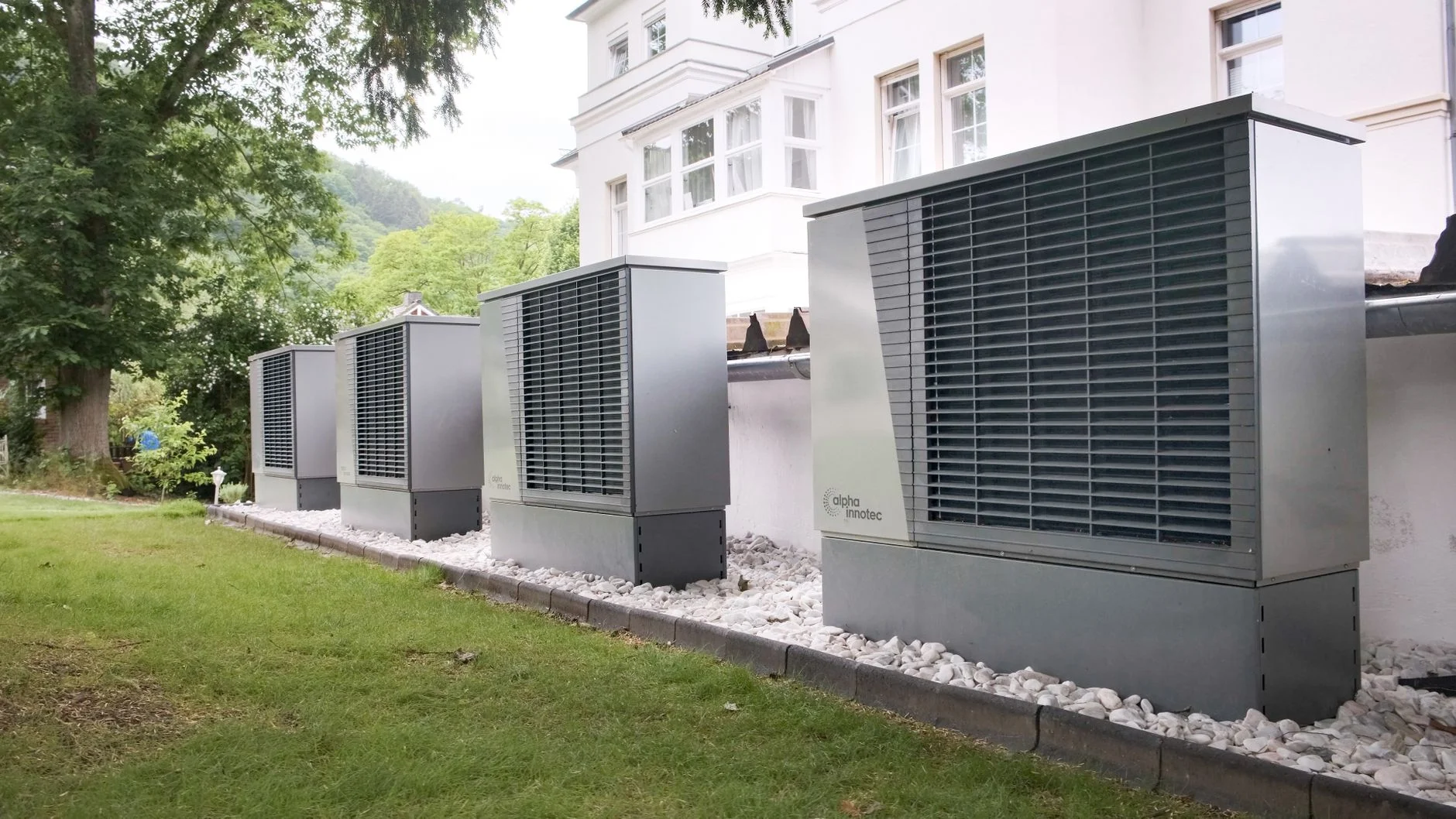
The single biggest objection people raise when considering a heat pump is this: “My house is too old.” It’s understandable. Victorian and Edwardian properties have solid walls, draughty sash windows, and high ceilings — the opposite of what a heat pump seems to want. But the picture is more complicated than the sales pitch on either side admits. Installing a heat pump in an old house is entirely possible, sometimes straightforward, and occasionally a bad idea. What follows is an honest guide to figuring out which camp your home falls into.
Why Heat Pumps and Old Houses Are a Complicated Match
Heat pumps are not a like-for-like replacement for gas boilers. A gas boiler heats water to 70–80°C and blasts it around your radiators; a heat pump typically runs a flow temperature of 35–55°C. That lower temperature still heats your home — but only if the heat delivery system is large enough to compensate. In a well-insulated modern home with large radiators or underfloor heating, this isn’t a problem. In a draughty 1890s terrace with original cast-iron radiators and no wall insulation, you may find that the heat pump struggles to keep up on the coldest days of the year.
That said, the Energy Saving Trust notes that roughly a third of UK homes built before 1919 have already received some form of insulation upgrade. Many older homes are better than their reputation — and many have been extended, rewired, and renovated to the point where “Victorian house” tells you surprisingly little about how they’ll perform with a heat pump.
What Matters Most: The Heat Loss Calculation
Before any installer quotes you a heat pump, they should perform a heat loss calculation — a room-by-room assessment of how much heat escapes your home. This is not optional. MCS-certified installers are required to carry one out before installation under MCS standard MIS 3005. If an installer skips this step or produces a quote based on guesswork, walk away.
The heat loss calculation tells you three things:
- The size of heat pump your home needs
- Whether your existing radiators can deliver enough heat at lower flow temperatures
- Which rooms, if any, need upgraded radiators or additional insulation to make the system work properly
For old houses, heat loss figures are typically higher than modern homes — sometimes two or three times higher per square metre. That doesn’t automatically rule out a heat pump, but it does mean the system needs to be sized correctly. An undersized heat pump in a leaky Victorian terrace will run its backup electric heater constantly, destroying any hope of efficiency.
Insulation: What You Actually Need
There’s a persistent myth that you need to insulate your home to near-Passivhaus standards before a heat pump will work. This is not true. What you need is insulation that reduces heat loss to a level the heat pump can comfortably cover.
For a typical detached pre-war house, the priority order for insulation investment is:
- Loft insulation — cheapest, highest impact. If your loft has less than 270mm of mineral wool, top it up. Costs from £300 for a typical loft, often free via ECO4.
- Cavity wall insulation — only relevant if your house has cavity walls (most post-1920 homes do). Costs around £500–£1,500.
- Solid wall insulation — the expensive one. Victorian terraces have solid brick walls, which means either internal insulation (loses floor space, costs £8,000–£15,000 per property) or external render (costs £10,000–£25,000 and requires planning permission for front elevations). This is often the sticking point for older homes.
- Draught-proofing — letterboxes, skirting boards, suspended timber floors. Cheap and often overlooked. Can cut heat loss by 10–15% in a draughty terrace.
The honest answer: you don’t always need solid wall insulation to make a heat pump work, but without it your heat pump will be larger, your radiators will need to be bigger, and your running costs will be higher. Get the heat loss calculation first, then decide what insulation actually buys you.
See our full Heat Pump Costs guide for a breakdown of typical combined installation and insulation budgets.
Planning Permission: The Listed Building Problem
For most homes — including unlisted Victorian terraces and semis — an air source heat pump qualifies as permitted development. You can install one without applying for planning permission, provided the unit is no larger than 0.6m³, is not installed on a wall or roof facing a highway, and does not affect a listed building or a designated area like an AONB or conservation area.
But if your home is listed or sits inside a conservation area, the situation is more complex:
- Listed buildings require Listed Building Consent for any works that affect the character of the building. An external heat pump unit at the rear may be acceptable; one on the front will almost certainly not be.
- Conservation areas restrict permitted development for heat pumps on walls or roofs that face a highway. Rear-garden installations are usually fine.
- Ground source heat pumps avoid the external-unit issue entirely, since all pipework is buried underground. They’re often the better option for listed buildings where external alterations are restricted.
The UK government’s permitted development guidance covers the conditions in detail. If you’re in any doubt about your property’s status, check with your local planning authority before spending money on a system design. Read more about the planning rules in our Heat Pump Installation guide.
Real Retrofits: What Success Actually Looks Like
The Electrification of Heat demonstration project, run by the Department for Energy Security and Net Zero and published in 2023, monitored 742 heat pumps across a range of UK home types, including a significant proportion of older properties. The project found a median Seasonal Coefficient of Performance (SCOP) of 2.8 — meaning the heat pump produced 2.8 units of heat for every unit of electricity consumed. Notably, performance did not correlate strongly with building age. Older properties that had been properly insulated and had correctly sized heat delivery systems performed as well as modern ones.
What distinguishes the successful retrofits from the failures? Three things consistently come up:
- A proper heat loss calculation and system design before installation
- Radiators that were assessed and upgraded where needed (not necessarily all of them)
- An installer who knew what they were doing and came back to commission the system properly
Our Heat Pump Suitability checklist walks through the assessment step by step if you want to do a first-pass assessment before contacting an installer.
When an Old House Is a Poor Candidate
Honesty matters here. Some old houses are genuinely not well-suited to a heat pump in their current state, and it’s worth knowing the warning signs:
- Very high heat loss with no practical insulation route. A grade I listed building with uninsulatable stone walls, single-glazed sash windows that must be preserved, and no loft space is a genuinely hard case. A heat pump can still work, but it will need to be much larger, and running costs may be similar to gas.
- No space for an outdoor unit or borehole. A mid-terrace with a tiny backyard and a restrictive conservation area to the front has limited options.
- Warm air or electric storage heating. These systems aren’t compatible with a heat pump without significant additional work.
- A house in poor structural condition. Sort the damp and structural issues first. Heat pump installation disturbs walls and floorboards; doing it in a property that needs major renovation is inefficient sequencing.
If your heat loss is very high and solid wall insulation isn’t feasible, it may be worth considering whether a hybrid system — combining a heat pump with a small gas boiler for the coldest days — makes more practical sense for now. Hybrid systems are less efficient than pure heat pump installations, but they’re a pragmatic stepping-stone for hard-to-treat properties.
The Boiler Upgrade Scheme and Old Houses
The government’s Boiler Upgrade Scheme (BUS) offers £7,500 towards an air source or ground source heat pump, regardless of the age of your property. Listed buildings are eligible. Conservation area homes are eligible. The only restrictions relate to the heat pump itself (it must be MCS-certified and installed by an MCS-certified installer) and the property (you must have a valid EPC with no outstanding recommendations for loft or cavity wall insulation, or have evidence those recommendations are not applicable).
That EPC condition catches some older homeowners out. If your EPC recommends cavity wall insulation for a house that actually has solid walls, you’ll need a surveyor to confirm the recommendation doesn’t apply before your installer can claim the grant. This is a paperwork issue, not a technical one — but allow time for it.
Cost Realities for Old Houses
Installing a heat pump in an old house tends to cost more than in a modern one, primarily because of:
- Larger heat pump required (higher heat loss = bigger unit)
- More radiator upgrades needed (undersized relative to lower flow temps)
- Possibly adding a hot water cylinder if the home currently has a combi boiler
- Additional pipework, particularly if the property was extended at various points in its life
A realistic all-in budget for an older detached house — including the heat pump, installation, a cylinder, and a handful of radiator upgrades — is £12,000–£20,000 before the BUS grant of £7,500. After the grant, you’re typically looking at £5,000–£13,000. For a semi-detached Victorian property with moderate heat loss, the lower end of that range is achievable.
Our Heat Pump Costs guide has a full breakdown of what drives the price up and down, and the Savings Calculator can give you a rough payback estimate based on your current heating bills.
The Bottom Line
Old houses and heat pumps can work very well together. The technology is not fundamentally incompatible with older buildings — what matters is whether the insulation and heat delivery system are good enough, and whether the installation is designed and commissioned properly. Get a proper heat loss survey. Use an MCS-certified installer. Understand the planning rules if your property is listed or in a conservation area. And don’t let anyone tell you it’s impossible without doing the maths first.
That said, a handful of properties — particularly heavily listed buildings with genuine no-go constraints — may find the economics don’t stack up yet. In those cases, it’s better to know now than after you’ve committed.