Installation
Heat Pump Hot Water Cylinder UK: What Size Do You Need?
Heat pumps cannot work with a combi boiler setup — they need a hot water cylinder. Here's how to choose…
October 9, 2026
Read more →
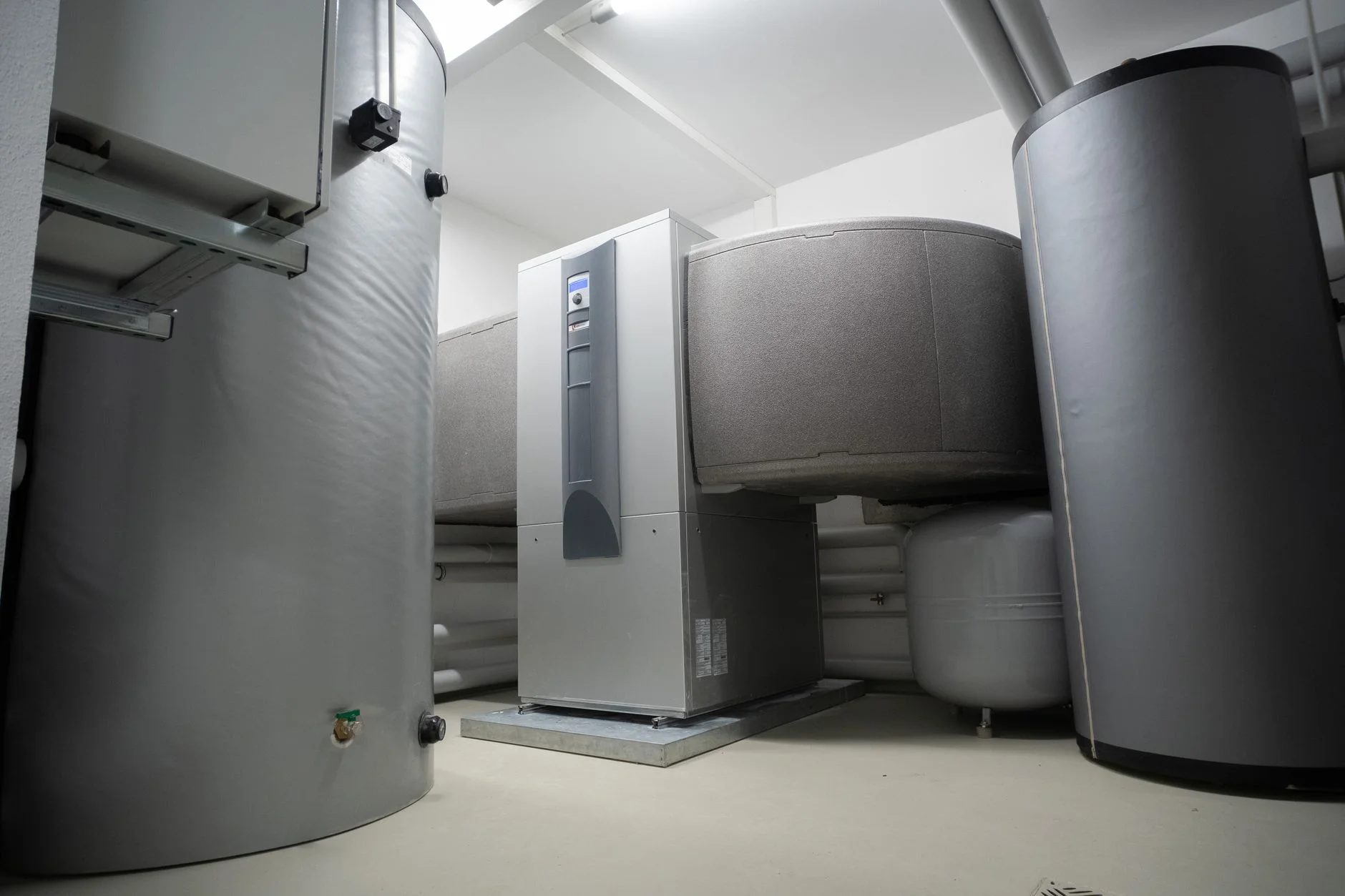
Heat pump planning permission is one of the most Googled questions by homeowners considering the switch — and the good news is that for the majority of UK homes, you won’t need it. Air source heat pumps are covered by Permitted Development rights in England, Scotland, and Wales, meaning installation can proceed without a formal planning application. But there are specific exceptions, and getting it wrong can create problems with grants, warranties, and future property sales. This post explains the rules clearly.
Permitted Development (PD) rights allow certain types of building work to go ahead without a full planning application. They are granted by government legislation rather than by your local council, though councils can — in specific areas — withdraw PD rights via Article 4 directions. For heat pumps, PD rights mean the vast majority of homeowners can install a system without any contact with their local planning authority.
The relevant legislation is The Town and Country Planning (General Permitted Development) (England) Order 2015 (with equivalent legislation in Scotland and Wales). This grants PD for air source heat pump installation subject to conditions.
In England, an air source heat pump installation qualifies as Permitted Development if all of the following conditions are met:
If all these conditions are satisfied, no planning application is needed. Your MCS-certified installer will confirm compliance as part of the installation process.
Planning permission is needed when Permitted Development rights don’t apply or have been removed. The main situations are:
If your home is a listed building, you need listed building consent in addition to potentially needing planning permission for any external alteration — including fitting a heat pump. Contact your local planning authority before proceeding. Listed building consent is separate from planning permission; you may need both. Some listed building owners have successfully installed heat pumps, but the process requires careful engagement with the conservation officer.
In conservation areas, the Permitted Development rules are more restrictive. An air source heat pump on a wall or roof visible from a highway requires planning permission. If the unit would be hidden from the road (e.g. in a rear garden not visible from any public road), PD may still apply. Check with your local planning authority if in doubt.
Permitted Development rights for heat pumps do not apply to flats or maisonettes. Any installation in a flat technically requires planning permission — and in practice, lease agreements and building management rules often make installation impossible regardless of planning. If you live in a flat, contact your freeholder and the building manager before approaching any installer.
Local councils can remove Permitted Development rights in specific areas through Article 4 directions. These are not common but do exist in some sensitive areas. Your installer should check this as part of their pre-installation survey, but you can also check on your local council’s planning portal.
Broadly yes, but there are differences in the detail:
Scotland: Air source heat pumps are permitted development for most houses under Scottish planning regulations. The rules around listed buildings and conservation areas are similar to England. The Scottish Government’s heat pump guidance covers the specifics.
Wales: Permitted Development rights apply similarly to England. The Welsh Government has been updating its planning policy to facilitate low-carbon heating. Check with your local planning authority (LPA) in Wales if you have any uncertainty about your specific property.
Ground source heat pump installation (boreholes or ground loops) is also generally covered by Permitted Development in England, as the works are underground and don’t create an above-ground structure. However, borehole drilling near aquifers or in areas of special scientific interest may require an environmental permit from the Environment Agency. Your installer should assess this as part of the project planning. Our air source vs ground source guide covers the installation requirements for both systems.
Even where Permitted Development applies, the installation must comply with MCS Planning Standard MIS 3005, which sets noise limits for heat pump installations. The standard requires that the noise level from the heat pump at a neighbour’s nearest window or door does not exceed 42 decibels. Modern heat pumps are typically 40–50dB at one metre, so siting the unit carefully is important — especially in attached or terraced properties. See our heat pump noise guide for detail on what to expect.
Even when Permitted Development clearly applies, some homeowners choose to apply for a Certificate of Lawful Development from their local planning authority. This is an optional document that formally confirms the installation is lawful — useful for property sales, remortgaging, or future disputes. Cost is typically £103–£206 (half the standard planning fee). It’s rarely essential for a heat pump, but can provide peace of mind in borderline cases (e.g. a conservation area where the siting is arguably not visible from a highway).
Your MCS installer will be familiar with the planning requirements for your area. For the full financial picture of getting a heat pump, see our heat pump costs guide and our grants guide.
Heat pumps cannot work with a combi boiler setup — they need a hot water cylinder. Here's how to choose…
The quality of your installer matters more than the brand of heat pump you choose. Here's how to find MCS-certified…
A hybrid system combines an air source heat pump with your existing gas boiler — the heat pump handles mild…